

25 days. 25 posts. One platform that refuses to disappear. This series looks at why SharePoint is still standing after 25 years, what it gets right, where it still hurts, and the real lessons you only learn after building, breaking, and rebuilding it in the real world. No nostalgia.. No marketing slides. Just honest takes leading up to the SharePoint at 25 digital event on March 2.
- Day 25: SharePoint survived because it chose substance over spectacle
 After 25 years, SharePoint remains the backbone of Microsoft 365 because it chose integration, governance, and endurance over hype. Substance outlasts spectacle.
 - Day 24: SharePoint was never just a website builder
 SharePoint began as a collaboration platform, not a website builder, and evolved into the content backbone of Microsoft 365 powering Teams, Viva, Graph, and Copilot.
 - Day 23: What I would build differently in SharePoint today
 Looking back at years of SharePoint builds, migrations, and rebuilds, here’s what I would do differently to design for longevity.
 - Day 22: Copilot will expose your SharePoint mess
 Copilot doesn’t break SharePoint. It exposes weak structure, messy permissions, and governance gaps that were already there.
 - Day 21: SharePoint retention beats cleanup every time
 SharePoint cleanup is painful and expensive. Retention works quietly in the background, aging content by design instead of panic.
 - Day 20: Two SharePoint defaults that cause daily pain
 Two SharePoint defaults made collaboration easier years ago, but today they quietly cause oversharing, confusion, and broken trust when left unchecked.
 - Day 19: SharePoint navigation is not a sitemap
 SharePoint navigation fails when it mirrors structure instead of tasks. Clear, intentional navigation helps users find what they need without relying on search or knowing the site hierarchy.
 - Day 18: SharePoint governance shouldn’t punish users
 SharePoint governance fails when it punishes users. Sustainable governance balances empowerment with structure, protecting collaboration, security, and trust without creating shadow IT.
 - Day 17: SharePoint migrations are emotional events
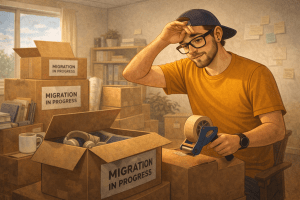 People don’t miss files during SharePoint migrations. They miss familiarity. Years of platform changes show why migrations feel personal and resistance is often about trust, not technology.
 - Day 16: SharePoint features we thought would change everything
 A nostalgic look back at SharePoint features we once bet on, from Designer and InfoPath to Groove and Spaces, and why some ideas were simply outgrown.
 - Day 15: SharePoint lists quietly replaced half your apps
 SharePoint lists, aka Microsoft Lists, quietly replaced many custom apps by solving real problems with structure, simplicity, and speed.
 - Day 14: SharePoint and Teams are not rivals
 SharePoint and Teams are not rivals. Teams is the interface, while SharePoint remains the foundation for files, structure, and governance.
 - Day 13: The hidden tax of over-customizing SharePoint
 Over customizing SharePoint creates long term debt, breaks accessibility, and makes sites harder to maintain over time.
 - Day 12: The day I stopped fighting SharePoint users
 SharePoint adoption improved when design stopped fighting users and started accounting for real behavior, context, and empathy.
 - Day 11: Stop building SharePoint portals for executives
 SharePoint portals built for executives often look polished but go unused. Designing for real work drives better adoption.
 - Day 10: Fewer SharePoint web parts, clearer pages
 Too many SharePoint web parts create noise and confusion. Clear pages with fewer elements help users focus and get work done.
 - Day 9: Search is the real SharePoint homepage
 When users say SharePoint search is broken, it usually reflects poor structure and content, not a failure of search itself.
 - Day 8: Most SharePoint homepages fail before users even scroll
 Most SharePoint homepages fail because they try to say everything at once. Clarity matters more than content volume.
 - Day 7: SharePoint permissions are not governance
 SharePoint permissions are not governance. Permission sprawl creates risk, confusion, and ongoing maintenance pain instead of clarity.
 - Day 6: SharePoint version history is the quiet backbone of collaboration
 SharePoint version history quietly saves teams from mistakes, overwrites, and bad edits without requiring perfect behavior.
 - Day 5: SharePoint metadata only works if people use it
 SharePoint metadata only works when people use it. Overdesigned models and manual tagging quietly break adoption.
 - Day 4: SharePoint folders were never the problem
 Folders were never the problem in SharePoint. Poor structure and unclear information architecture are what make content hard to find.
 - Day 3: SharePoint is a document library platform first
 SharePoint works best when you treat it as a document library platform first. Get that wrong, and everything else becomes harder than it needs to be.
 - Day 2: The biggest lie we told users about SharePoint
 We spent years oversimplifying SharePoint to make it easier to explain. That shortcut backfired, damaged trust, and hurt long-term adoption.
 - Day 1: SharePoint at 25 and still standing
 SharePoint turns 25 this year. After years of predictions about its demise, it still powers Teams, Copilot, and core collaboration across Microsoft 365.
 Unsuck Microsoft365